










G ACTION -CLIMATE CHANGE
GLOBAL WARMING:
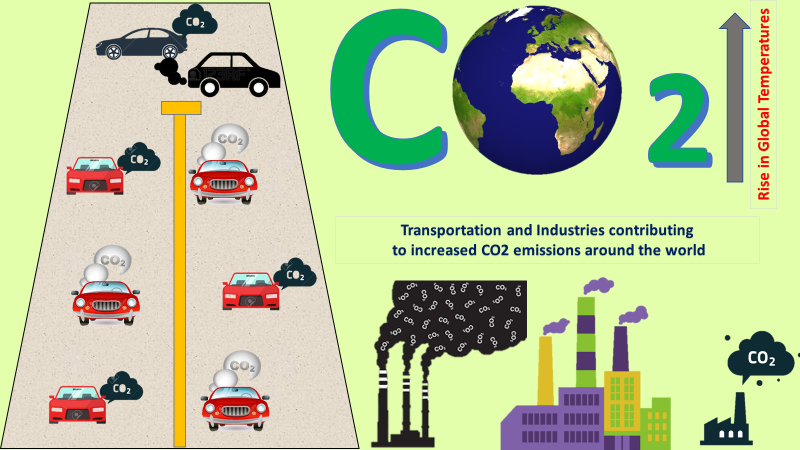
Global warming, continuous rise in the average temperature of Earth's atmosphere and oceans, is caused by increased concentrations of greenhouse gases (GHG; e.g. CO2, methane etc.) in the atmosphere, resulting from human activities such as deforestation and burning of fossil fuels etc. The current level of CO2 is approximately 407 ppm (parts per million) by volume, leading to a global temperature rise of 0.9 Degree C (base year 1880). The effects of global warming or climate change are wide spread and therefore, there is a need to control/prevent emissions of GHG, especially that of CO2.
CO2 SEQUESTRATION:
Carbon dioxide Capture and Sequestration can be defined as the process of separation of carbon dioxide from an emitting source of carbon dioxide; and the confiscation or seizure of that captured carbon dioxide into a useful product (fuel) by any means of technology. In CO2 mitigation post combustion technique, CO2 is removed after combustion of the fossil fuel (e.g. thermal power plants). The sequestered CO2 can either be transformed to other useful products or it can be stored permanently in deep geological formations (including saline formations and exhausted gas fields).
ALGAE -SOLUTION TO GLOBAL WARMING:
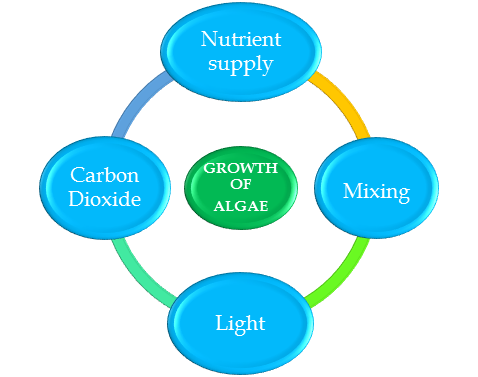
Algae, a diverse group of simple photoautotrophic organisms, which possess chlorophyll to manufacture their own food through photosynthesis. Algae have very high photosynthetic yields, where 3-8% of solar energy can be converted to biomass, whereas observed yields for terrestrial plants are about 0 .5%. Specifically, algae are capable of utilizing atmospheric CO 2 and nutrients present in water bodies in the presence of light for their growth. Algae are rich in protein and lipid content and can be processed to produce pharmaceutical products and bio-fuel.
MICRO ALGAE PHOTO- BIOREACTOR FOR CO2 SEQUESTRATION:
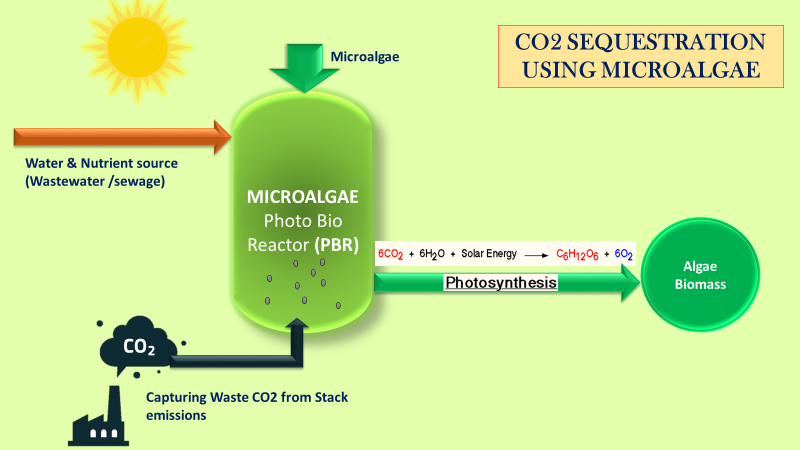
Open ponds and closed photo-bioreactor (PBR) are the two ways of sequestering CO2 using algae, which are currently being developed and used. Since open systems require large area to operate efficiently, technology is more focused on developing closed systems like photo-bioreactor (PBR), where the optimum conditions to grow algae and sequester CO2 can be maintained and controlled easily. Few species of microalgae have been identified that use CO2 efficiently because they can grow rapidly and can be readily incorporated into engineered systems, such as PBR.
Greengine is working to develop engineered Photo-bioreactor systems that’ll utilize microalgae and the process of photosynthesis to sequester CO2 emissions from anthropogenic sources, converting it into algal biomass, which can be used to generate clean energy and other beneficial by-products. However, the system needs to be more efficient in terms of capturing CO2 and should be carbon neutral, for implementation on a bigger scale for reducing global warming.
Thus, enhanced algae production can provide an environmentally and economically viable technology for CO2 sequestration. About 1.8 tons of CO2 are required for producing one ton of algae.